
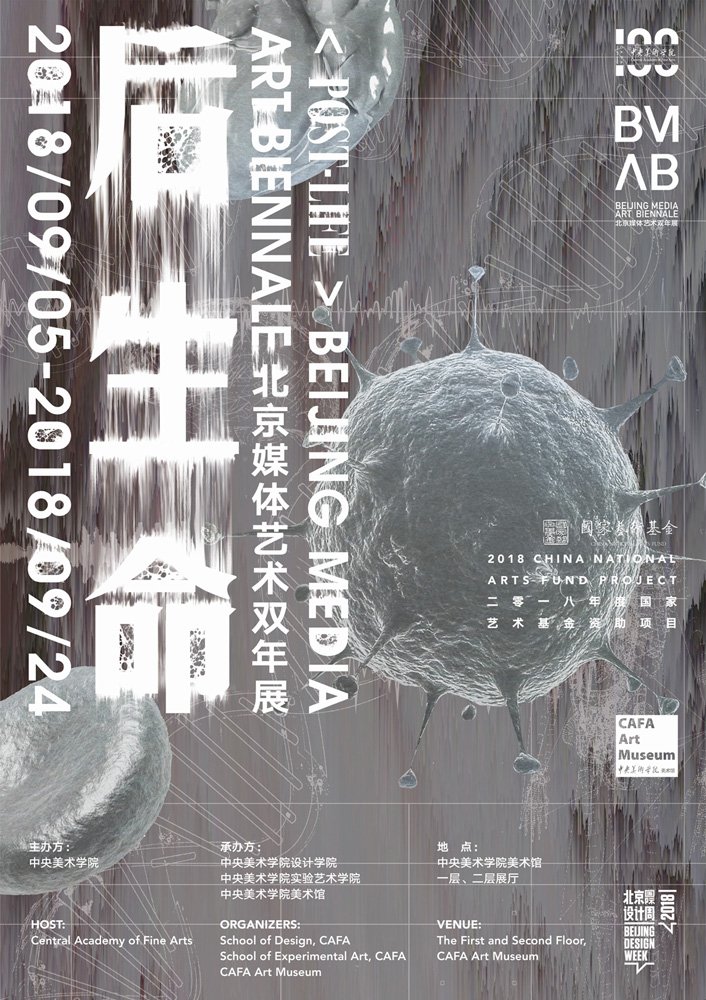
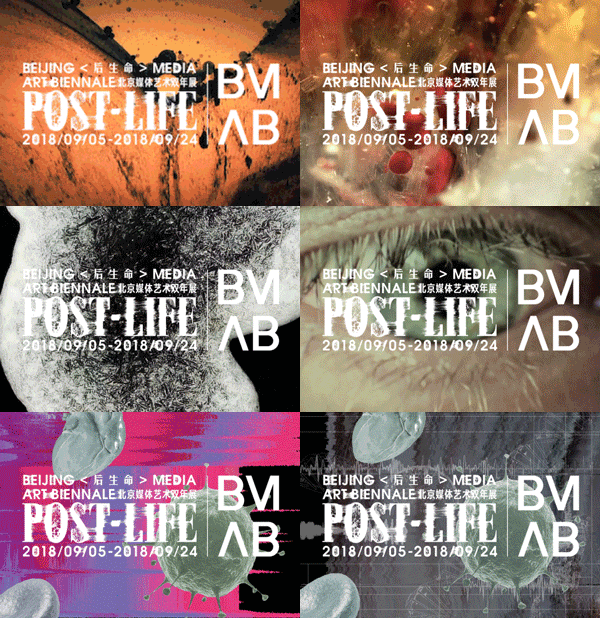
Through a series of audio-visual performances, the event will feature virtual life in algorithms, bionic life based on mechanical structures, and bionic life as an intermediary between the concepts of data life, mechanical life, and synthetic life, in three dimensions. The three dimensions of "Data Life", "Mechanical Life" and "Synthetic Life" will illustrate the meaning of "Post-Life" in an all-round way with virtual life in algorithms, bionic life based on mechanical frameworks, and synthetic life as a fuzzy boundary between the definition of life.
Types of works include, but are not limited to, moving images, interactive installations, immersive art, bio-art, mechanical installations, sound visualization, cyber art, sound art and mixed media.
About “Post Life”
Around the 1950s, the discovery of DNA and the articulation of the Central Dogma marked the beginning of humanity’s journey toward understanding itself and other species: the replication and reproduction of all life forms are governed by DNA. A series of major developments since the early 21st century—including the Human Genome Project, cloning technologies, and more recently, the widely discussed field of gene editing—have further reinforced and expanded our understanding of life.
As the foundational concept of molecular biology, DNA not only dismantled anthropocentric narratives but also introduced a form of egalitarianism centered on a “universal vitality” shared by all living beings. Whether we possess the courage to truly decenter the human as the measure of all things remains a fundamental question. In the posthuman context, it is a question that compels us to reconsider the meaning of “life” through an integrated lens of science, philosophy, sociology, economics, and other fields of thought.
Exhibited Works
A Tribute to Henk Badings. Evolution
by Emma Nilsson and Emil Schult
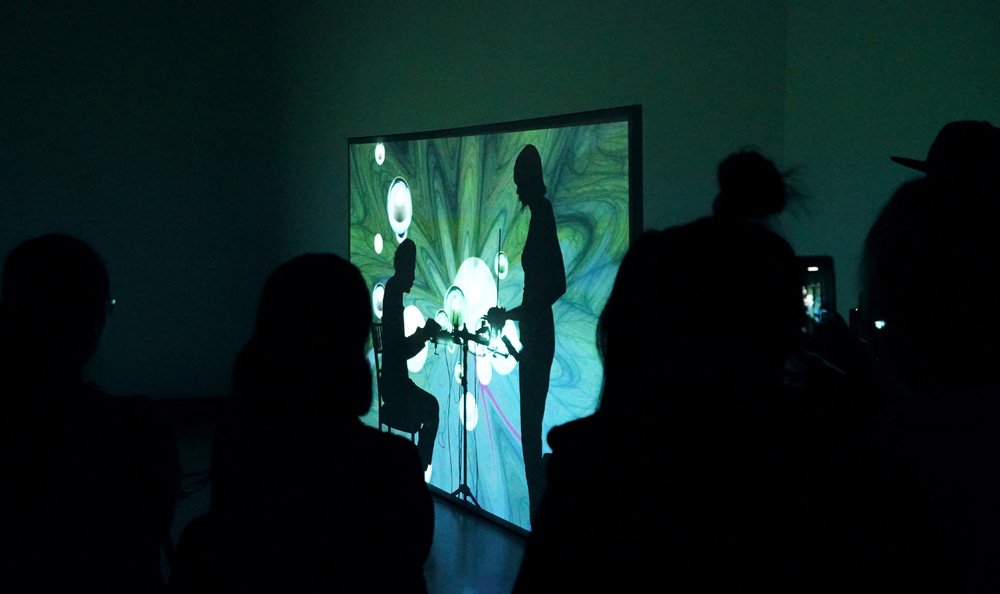
This work was conceived by the artist Henk Badings in the 1960s using early electronic devices. Over the years, these early pieces of technology have been simulated and digitized, becoming widely accessible through portable devices. The artist combines historical recordings with live performance to present the technological developments of that era to contemporary audiences. Using one of the earliest electronic instruments—the theremin—as the central instrument, the performers integrate it with tablets and computers in their rendition.
Topoi Koinoi
by Thomas Smith
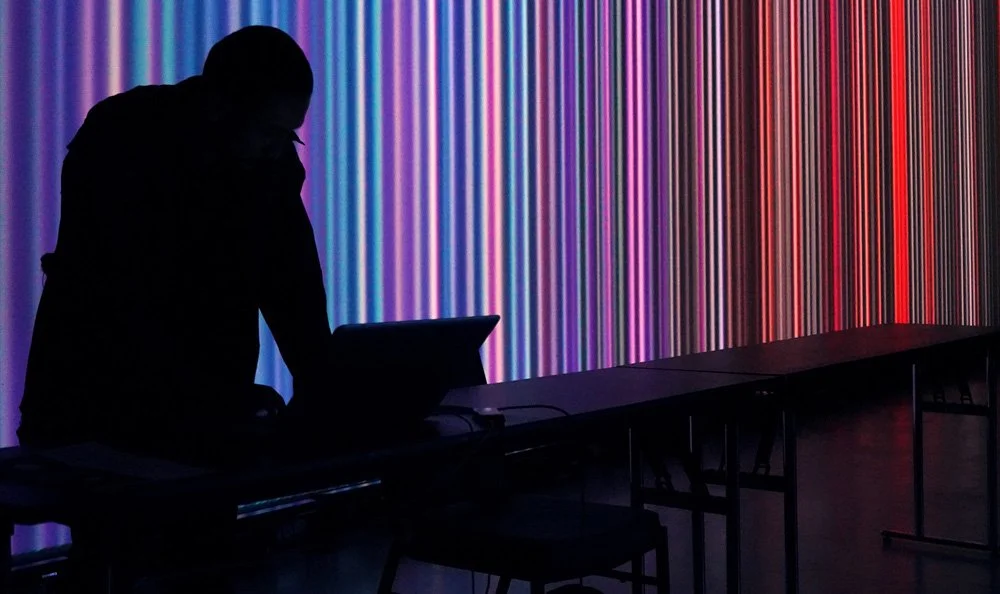
The title Topoi Koinoi is taken from Aristotle’s Rhetoric, in which general rhetorical themes—such as fear, friendship, hatred, anger, shame, kindness, and envy—are referred to as topoi koinoi, or “commonplaces.” In this work, the concept of commonplaces is transposed into the domains of physics, infrastructure, and computation. More than 2,000 rapidly scrolling images depict everyday infrastructural elements: devices, objects, technologies, roads, porches, pipes, credit cards, Ethernet cables, container ships, audio files—objects that are transported, transmitted, and circulated for the purpose of sustaining our highly stratified yet paradoxically interdependent society.
Night Museum - Post Life
At CHAO Art Center, in collaboration with BMAB Beijing Media Art Biennale, organizes the second Night Museum with the theme of "Post-Life". New media artists from various fields will create a night of art revelry, immersing themselves in the atmosphere of "post-life" and experiencing how, under the influence of the rapid development of bio generation, artificial intelligence and robotics, and in the context of post-humanity theories, the ancient concept of "life" is expanding and extending, and how human beings are expanding and extending their relationship with those on earth. Under the influence of the rapid development of bio generation, artificial intelligence and robotics, and in the context of the increasingly popular post-human theory, the ancient concept of "life" has been expanded and extended, as well as the subtle changes in the "non-anthropocentric" mentality of human beings in coexistence with other species on earth.
Limb Control Fundamentals
by Michaela Davies
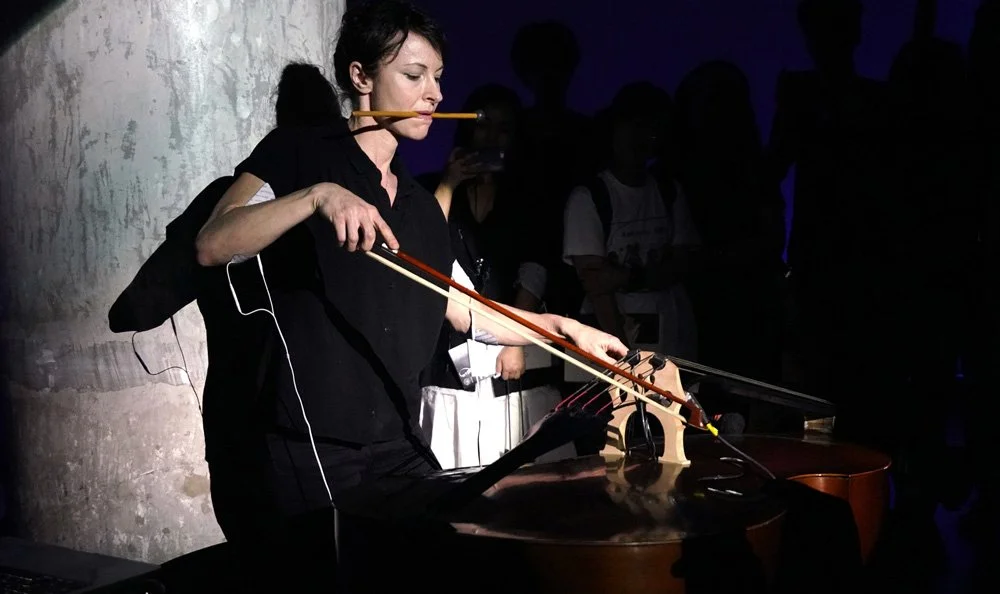
By examining the threshold between instructed execution and free interpretation that exists in all musical performance, a structured improvisational environment is created—one in which the performer’s actions are determined by electrical impulses sent to her muscles, compelling involuntary bodily movements. The use of electrical muscle stimulation within musical performance offers a novel way to explore the interface between technology and live performance, while also raising questions about authorship and agency in musical creation.
Body Pulse
by Qiu Yu
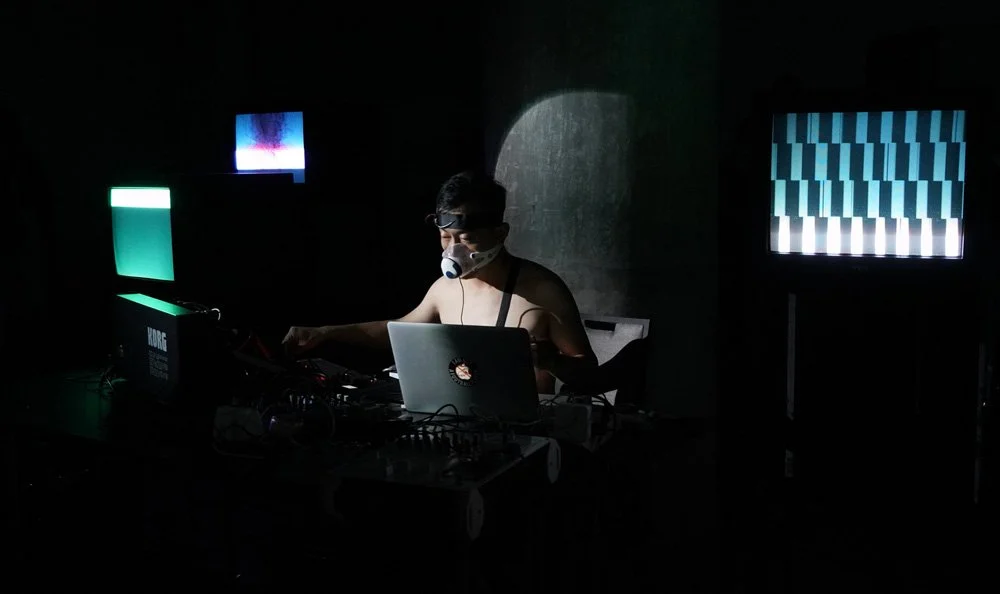
Sounds and bioelectrical signals from different parts of the human body are collected on-site and transformed into control signals that modulate an analog synthesizer and various live audio parameters. At the same time, different signal waveforms are used to generate and visualize the live imagery. Together, they form a system in which bodily, mechanical, and electronic data are converted and modulated—a live audio-visual performance driven directly by the human body.
A Tribute to Henk Badings. Evolution
by Emma Nilsson and Emil Schult
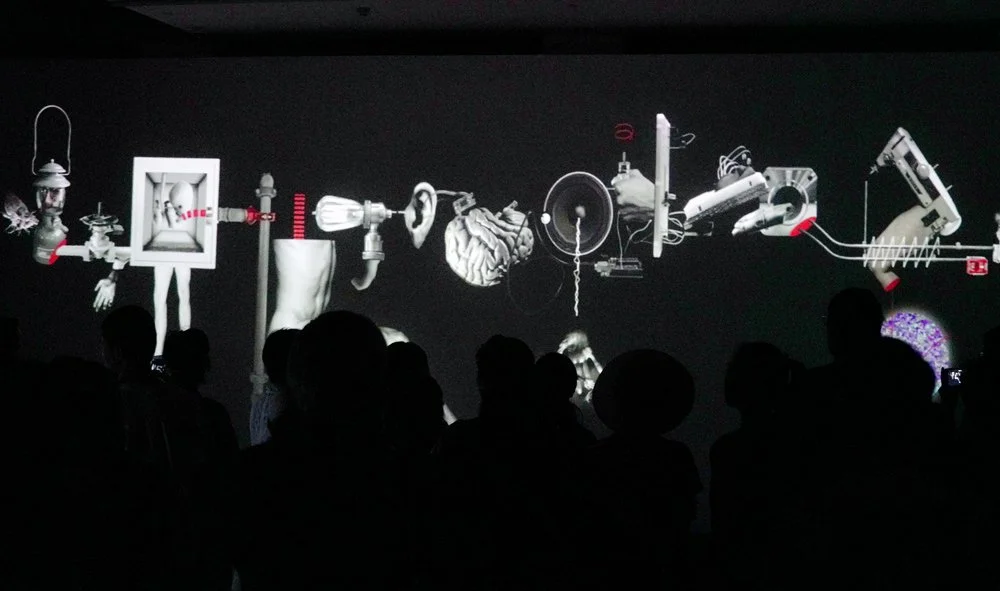
The development of technology triggered the Industrial Revolution, and the revolutionary advances across numerous fields during the 1960s and 1970s awakened a new awareness of the relationship between humans and machines—an awakening that also led to a rupture in traditional human values. The process of bridging this rift requires a continuous negotiation of the relationship between humans and machines, between humans and technology.
Artist Xu Yibo proposes to conclude the exhibition with a reference to the “Three Laws of Robotics,” first introduced by Isaac Asimov in his 1942 short story Runaround. At a moment when the future remains uncertain, he suggests that the only thing we can do is to establish, as far as possible, the rules that will guide us into what lies ahead.
Low resolution wave
by 4 Channels Club
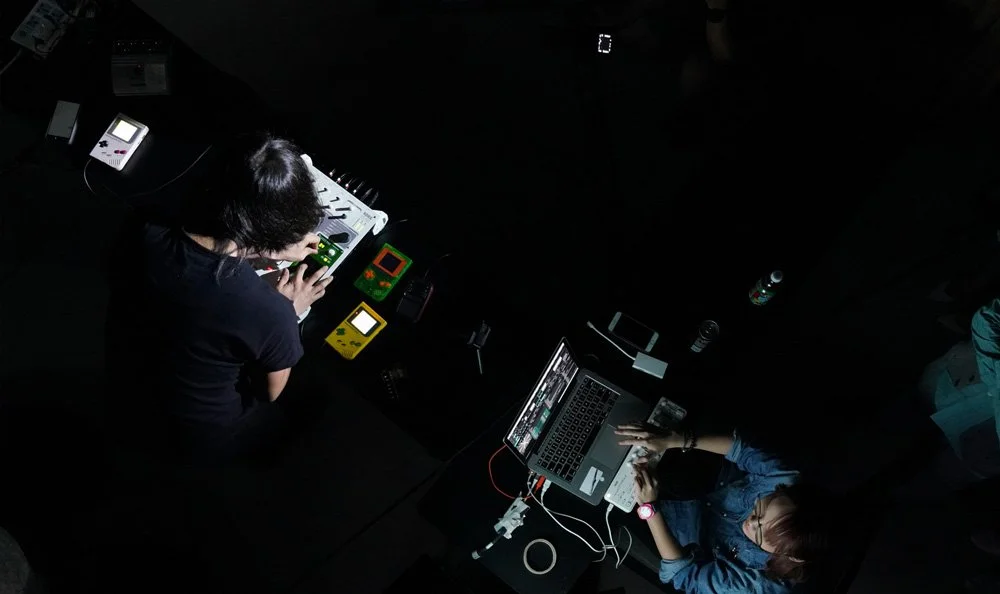
4 Channels Club was founded in 2015 by independent musician Ma Yao. It is a Chiptune / 8-bit electronic music project that composes using the hardware of Nintendo’s 8-bit game consoles. The project explores the sonic possibilities of game-console audio chips and pushes the boundaries between different musical genres. By re-creating compositions from the consoles’ fundamental single-wave tones, 4 Channels Club delivers distinctive audiovisual performances. New media visual artist Liu Sha joined the project in 2018.
NIGHT MUSEUM
Starting from August 2018, CHAO will be establishing a new concept Night Museum. Inspired by the abstract concept of museums and clubs, it allows various elements belonging to cultural and artistic aspects to be displayed in a dynamic atmosphere.
Night Museum is a new form of night party. Here people will have chances to enjoy different types of art including music, dance, dramas, movies and etc. The experience here will be updated every time, and all you have to do is be prepared to get involved into the best night event in Beijing with curiosity and enthusiasm.