Zang Kunkun
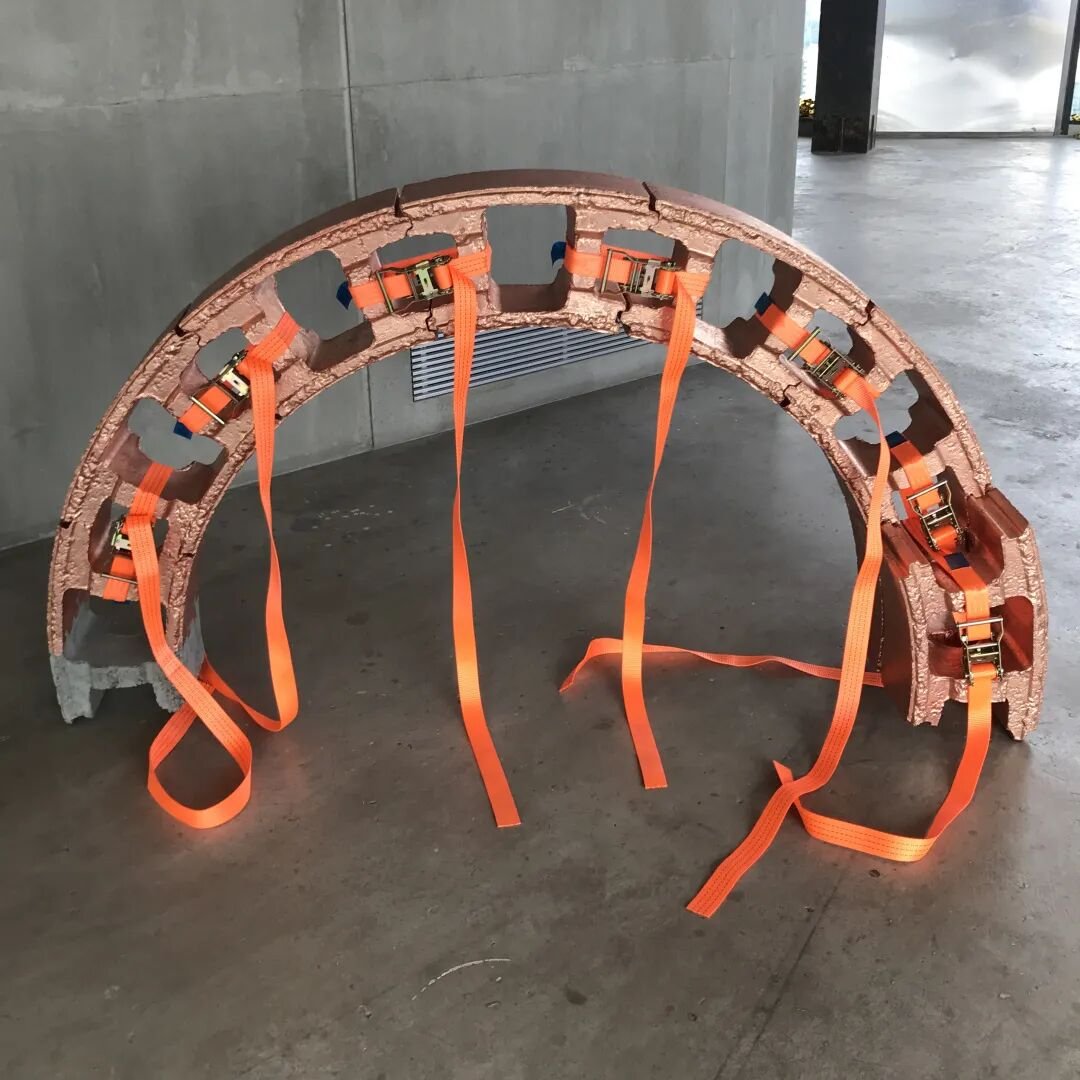
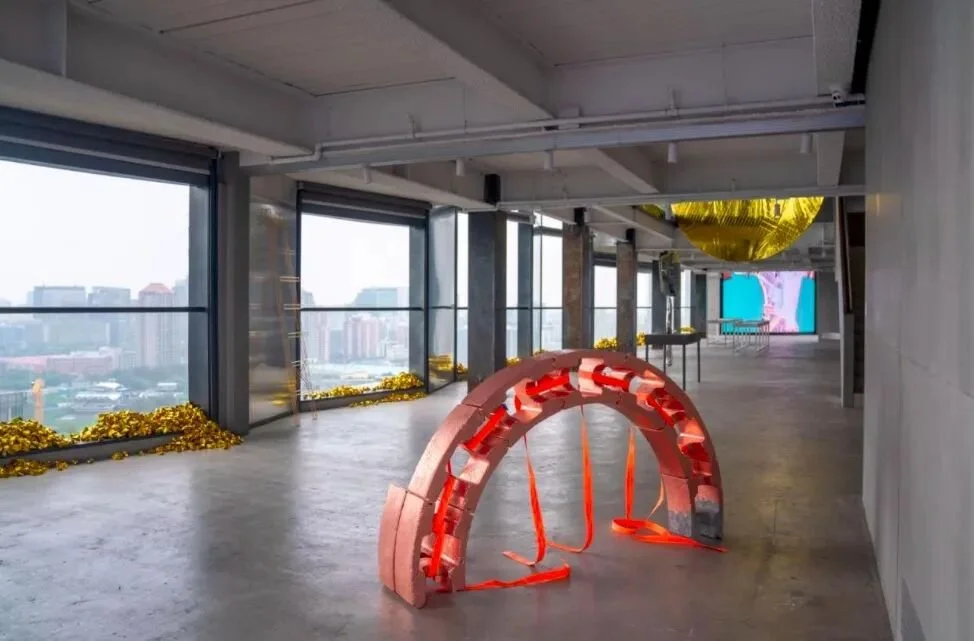
Upright (III), 2018, cement, copper, nylon straps, metal, wood, rubber wheels, 220 × 80 × 110.5 cm
These eight components, assembled with orange tension straps, are sourced from construction-site waste commonly found in China’s urbanization process—originally bricks used by workers to repair well walls. My intention was to explore a method of transformation distinct from traditional sculptural molding, creating forms that from a distance resemble metal castings, but up close reveal copper-foil surfaces painstakingly layered, pasted, and hammered countless times.
I abandoned quick techniques such as molding or spray-painting, instead adopting a slow process inspired by Northern and Southern Dynasties stone-rubbing methods, building up layers of copper foil to “transform” the cement material, counterbalancing industrial media with the warmth of the human body. Each brick is repeatedly covered with copper foil, leaving “evidence” at the base (the foil acts like brushstrokes, revealing the cement underneath). Relative to the solidity of the main form, this exposed cement functions as a “virtual” material imagination.
The number of these eight components was deliberately minimized so that the overall structure could just stand, creating a state that is both solid and precarious. The orange nylon straps, closely matching the color of copper itself, seem to warn viewers not to approach, while their randomly placed softness counterbalances the precise rigidity of the bricks. These essential elements together form an organic whole. Just like the raw materials used—cement, copper, and nylon—the title Upright reflects the self-sufficiency of these basic elements.